
Muscular System Definitions
- Origin – The point at which a muscle attaches to a bone that remains stable during movement. The Origin will always be the point of insertion closer to the midline of the body.
- Insertion – The point at which a muscle attaches to a bone that will move during a movement, The insertion will always be the point of attachment further away from the midline of the body.
- Agonist – The muscle(s) responsible for creating movement at a joint. It is the prime mover.
- Antagonist – The muscle(s) that oppose the agonist, providing a resistance for coordinated movement.
- Fixator – A muscle that stabilises one part of the body while the other produces movement.
Muscle Contraction
- Isotonic Muscle Contraction – muscle contraction where the muscle changes length during contraction. This can be concentric or eccentric.
- Concentric – A muscle contraction where the muscle shortens producing tension. E.g. The biceps brachii contract concentrically during the upward phase of a biceps curl.
- Eccentric – A muscle contraction where the muscle lengthens producing tension. E.g. The biceps brachii contract eccentrically during the downward phase of a biceps curl.
- Isometric – A muscle contraction where there is no change in the length of the muscle, but tension is still produced. E.g. The rectus abdominus contracts isometrically during a wall sit.
Movement Analysis
- In every paper 1, you will be asked to complete a movement analysis table.
- This will require you to consider many factors during a given movement.
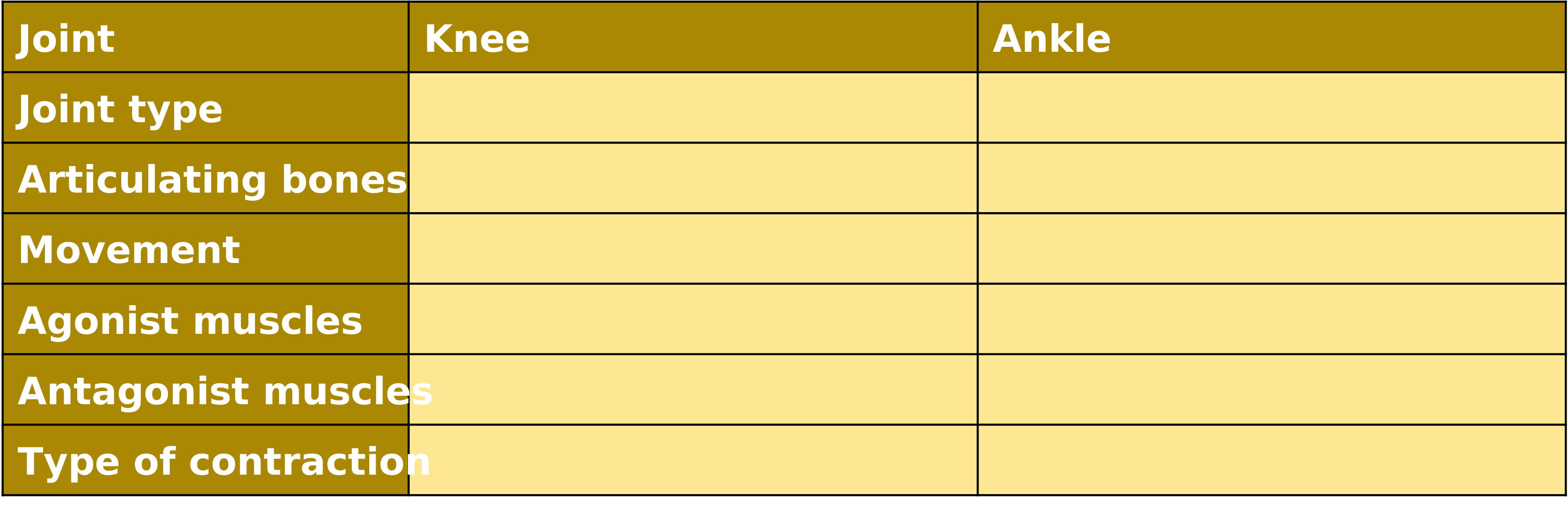
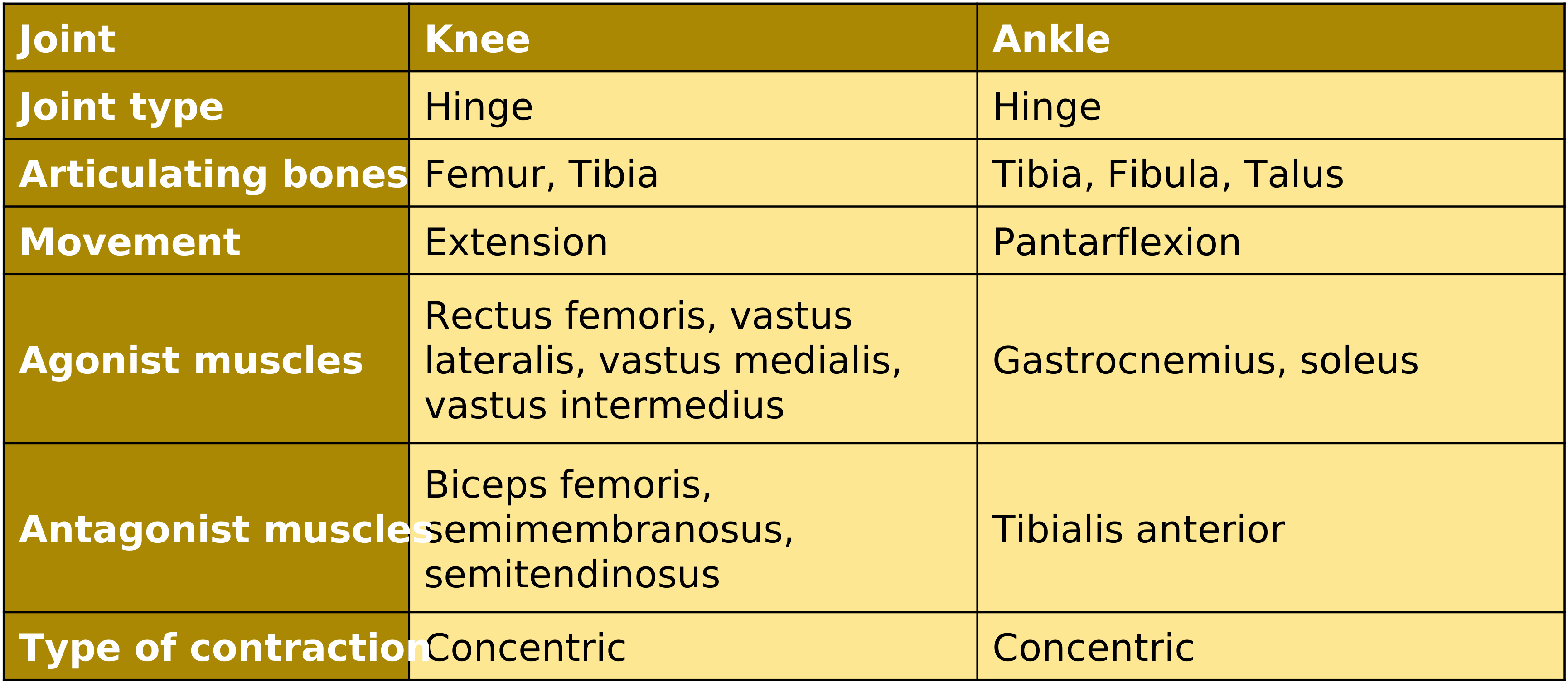
- These factors will be Joint type, articulating bones, type of movement, agonist muscle, antagonist muscle and contraction types.
- Below is an example of an empty and complete movement analysis table for the right leg when kicking a football as shown in the picture below.

Muscles and Movements
- Remember, the agonist of one movement will always be the antagonist of the opposing movement.
- E.g. The agonist muscle for elbow flexion will be the antagonist muscle for elbow extension.
- A great task in practising this topic is to look up photos of athletes competing in their sports. Then, zoom in on each of their joints and name the movements being performed and the agonists and antagonists in this movement.
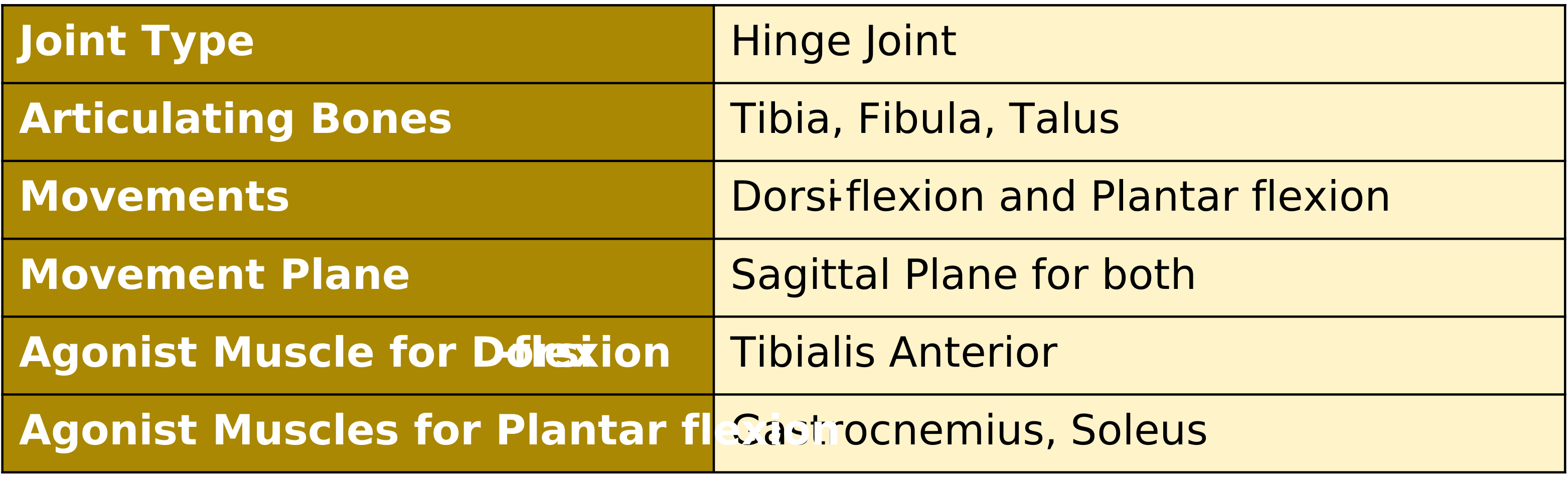
Ankle
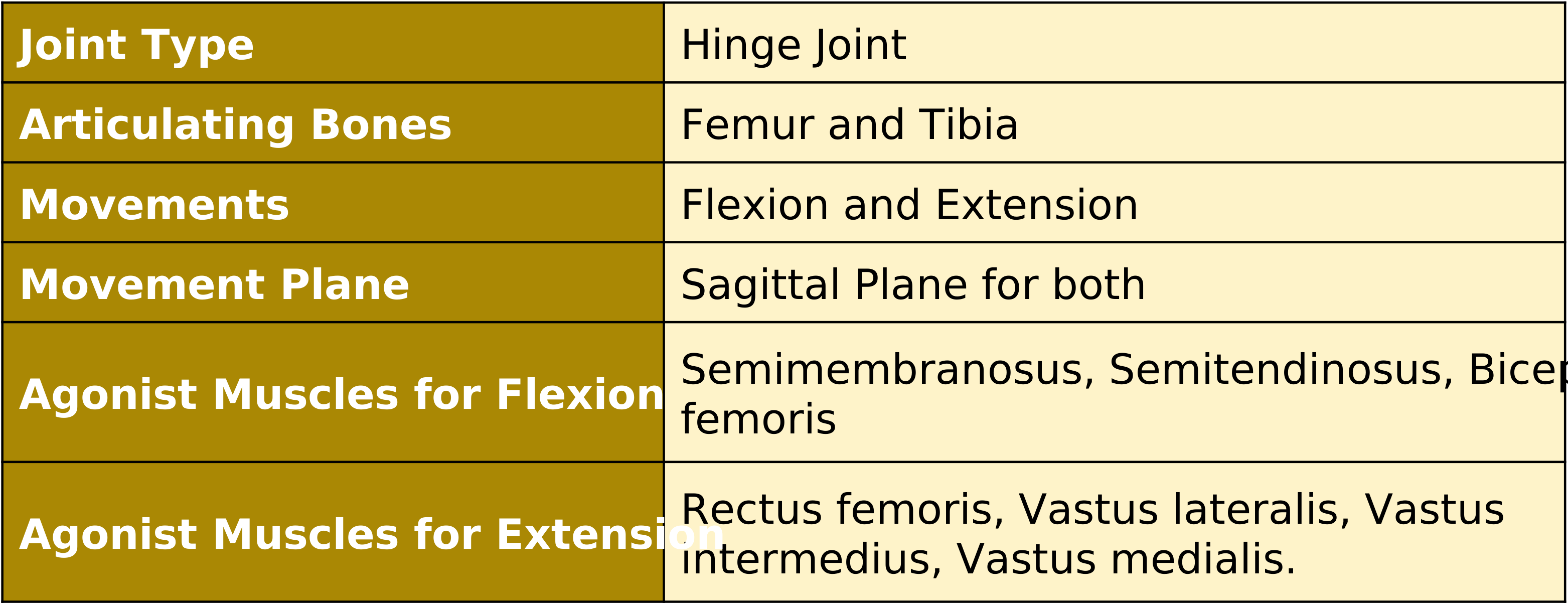
Knee
Hip
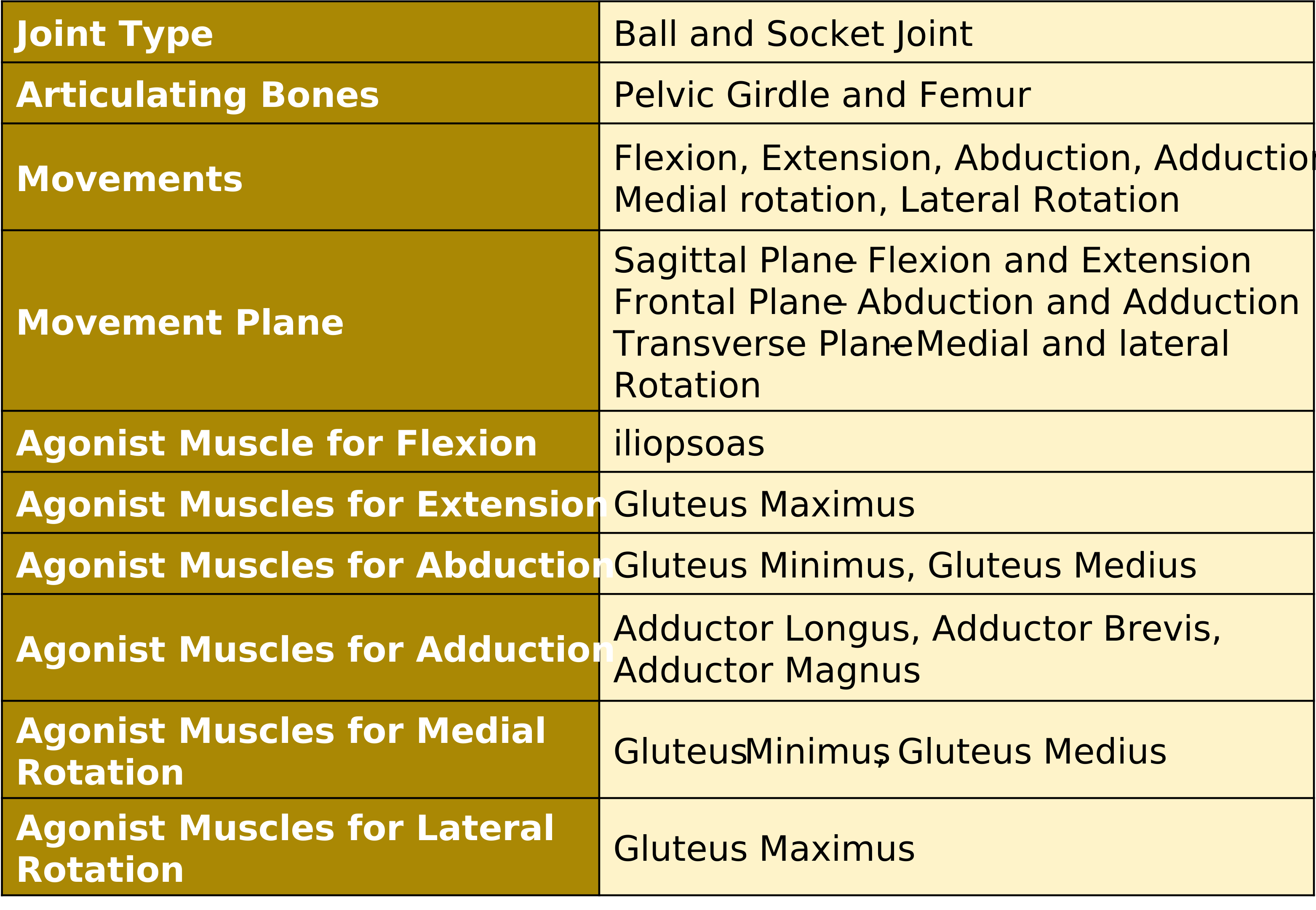
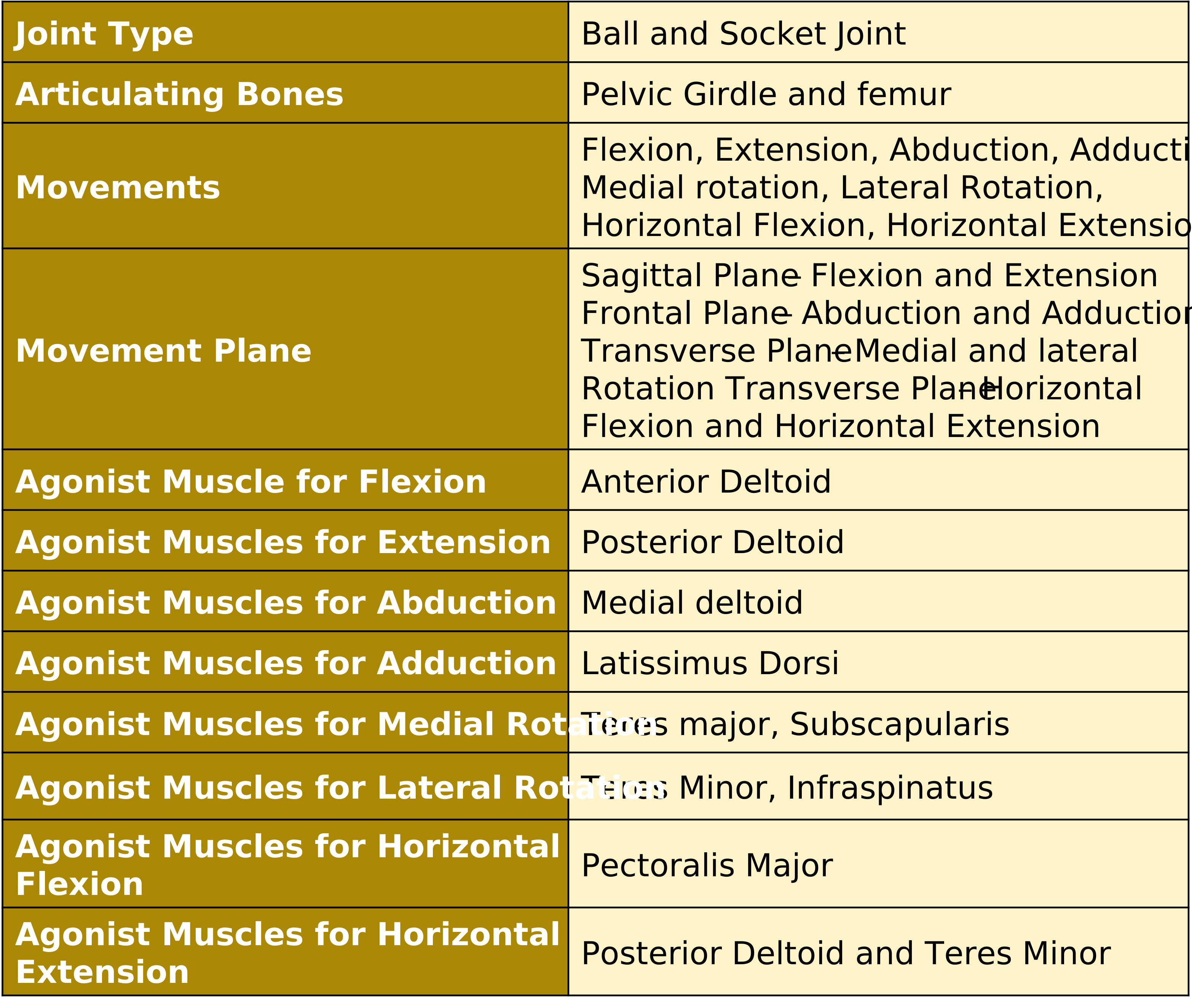
Shoulder
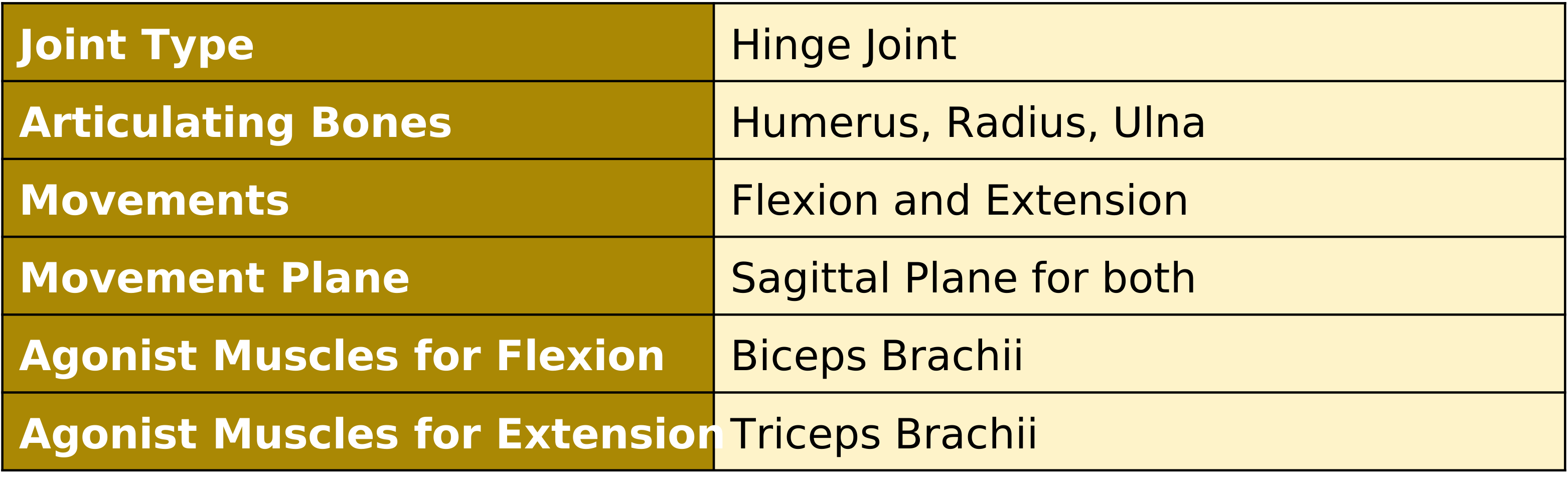
Elbow
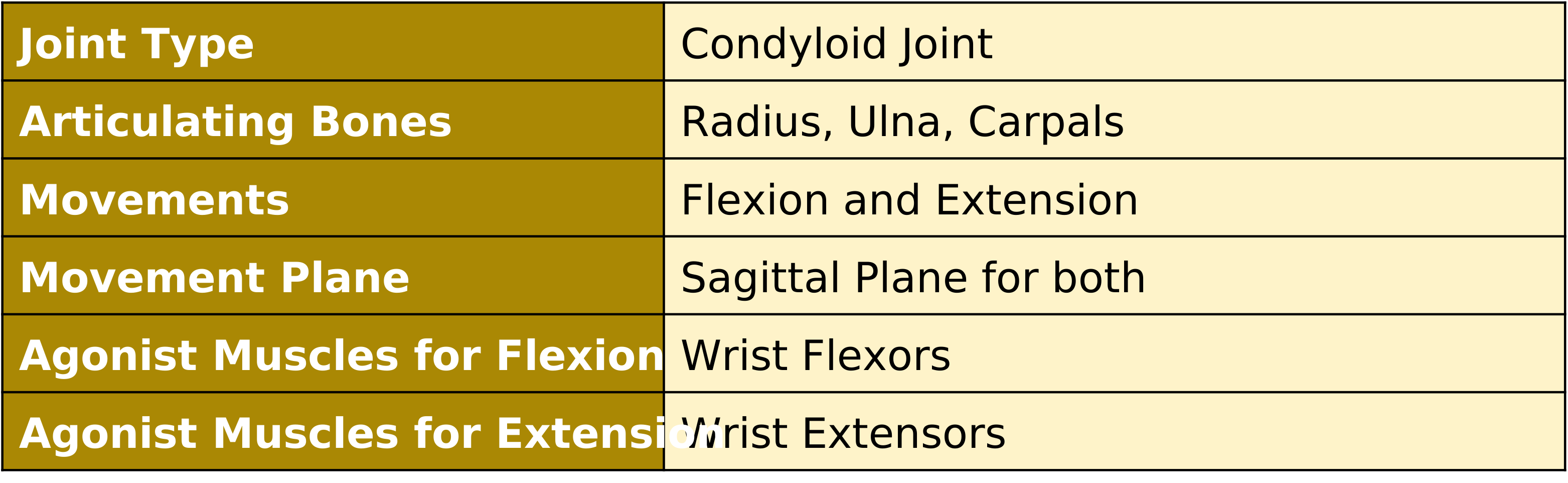
Wrist
The Motor Unit and Skeletal Muscle Contraction
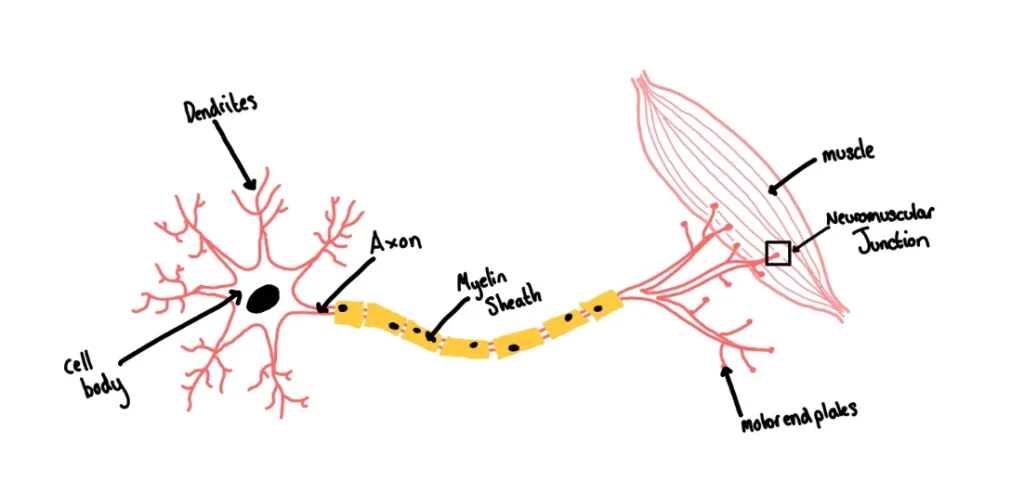
- A motor unit is a motor neuron and the muscle fibres that it stimulates.
- A motor unit carries impulses from the brain to muscle fibres, initiating muscle contraction.
The Process of Skeletal Muscle Contraction
The most common exam question to be asked on this topic will be to describe the nervous process of muscle contraction.
- The Central Nervous System (CNS) sends electrical impulses to the cell body of a motor neuron.
- An action potential is triggered when sodium ions diffuse into the axon.
- The impulse travels down the axon to the point at which the axon’s motor end plates reach a synapse before a muscle fibre. This is called a neuromuscular junction.
- At the synaptic cleft, a neurotransmitter called acetylcholine is secreted into the synapse to help the electrical impulse cross the gap to the muscle fibre.
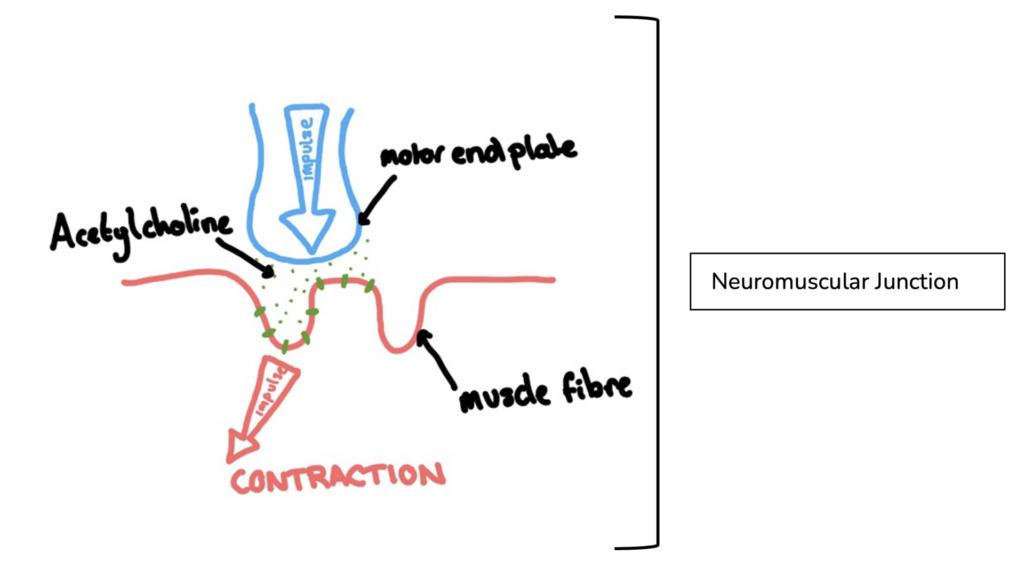
- If the amount of acetylcholine secreted exceeds the threshold, a muscle contraction will occur, and the muscle fibres will contract at full force.
- If the threshold is not exceeded, no contraction will occur. This is called the all-or-none law.